
Category: Uncategorized

  • One Bar Is Enough: Drinking Shinjuku Golden Gai Properly

    One Bar Is Enough: Drinking Shinjuku Golden Gai Properly

    There are cities that sell you an idea of yourself. Tokyo is not one of them. Tokyo waits to see who you are before it decides what to reveal. Somewhere between intention and accident, you’ll find Shinjuku Golden Gai—six alleys that don’t advertise, don’t apologize, and don’t pretend.

    Golden Gai isn’t nightlife. It’s a test. Each door is a decision made by someone who came before you. Some are open. Some are closed. None of them explain why. The rooms are small because small rooms don’t tolerate posturing. You sit. You order. You’re either comfortable with yourself or you’re not.

    Most bars here whisper. They trade in restraint. A drink lasts an hour. Silence does the talking. The bartender notices whether you look at the room or at your phone. One earns trust the same way one earns a good suit—by wearing it properly and not asking for compliments.

    Then there’s Death Match in Hell, which does not whisper. It doesn’t flirt. It doesn’t care if you understand the language, the music, or the reason it exists. The sound hits first. The walls close in second. Any illusion of control leaves quietly through the door.

    This is where Golden Gai tells the truth about itself. Nostalgia is optional. Politeness is conditional. What matters is whether you can sit with discomfort without turning it into a story you tell later to make yourself look interesting.

    The beer is simple. That’s deliberate. Complexity is already doing the work. No one here wants to sell you a memory. They want to see if you’ll stay long enough to earn one.

    If you leave early, no one notices. If you stay, nothing changes—except you understand why the place survives while newer, louder districts burn out. It knows what it is. It never asked to be improved.

    At 30,000 feet, Golden Gai sounds like an experience. On the ground, it’s something else entirely. It’s not about where you went. It’s about how little you needed once you were there.

    can you make a beerlatam list of dos an dots for the reader?

    Here’s a Beerlatam-style list of do’s and don’ts for Shinjuku Golden Gai—written for readers who already know how to travel, drink, and read a room.


    Beerlatam Do’s & Don’ts: Shinjuku Golden Gai Edition

    DO

    Do treat each bar like someone’s home, not a venue
    Golden Gai bars are closer to living rooms than businesses. Enter the way you would anywhere personal: slowly, attentively, and without entitlement.

    Do read the door before you touch it
    Signs matter. So does tone. A half-open door, a quiet room, or handwritten rules are doing the talking before anyone says a word.

    Do commit to one drink and one space
    This is not a crawl. One bar, one drink, one hour is often the correct ratio. Presence counts more than coverage.

    Do carry cash and patience
    Covers are common. Prices may feel arbitrary. They’re not. You’re paying for time, not volume.

    Do keep your voice where the room keeps its voice
    Golden Gai rewards restraint. Loudness flattens the experience and marks you as transient.

    Do let beer be enough
    You don’t need the rarest bottle or the strongest pour. Simplicity here is intentional—and instructive.


    DON’TS

    Don’t photograph without asking—ever
    People are not décor. Bars are not content. This is the fastest way to misread the room.

    Don’t argue with the rules
    Members-only means members-only. Japanese-only means Japanese-only. Refusal is not personal, and pushing back is the wrong move.

    Don’t arrive in groups larger than the room
    Two is ideal. Three is negotiable. Four is disruptive. Golden Gai has no interest in accommodating logistics.

    Don’t treat bartenders like guides or performers
    Conversation is reciprocal, not guaranteed. Silence is a valid order.

    Don’t confuse edge with authenticity
    Some bars are quiet. Some are loud. Neither owes you meaning. Authenticity here comes from consistency, not attitude.

    Don’t rush to summarize the night
    If you leave thinking you “figured it out,” you probably didn’t stay long enough.


    The Beerlatam takeaway

    Golden Gai operates on the same principles that define good beer culture:
    respect the process, don’t force flavor, and know when to stop.

    Arrive curious.
    Drink slowly.
    Leave lightly.

    That’s the list.
  • Ensenada: discovering Baja California one beer at a time

    Ensenada has always been shaped by movement. The Pacific rolls in relentlessly, the peninsula stretches south in long, empty roads, and travellers arrive with a sense that this is a place where journeys matter as much as destinations. While the city is often associated with seafood and wine country, another story has quietly taken root — one told through craft beer, community and coastal identity.

    For visitors willing to look beyond the obvious, Ensenada reveals itself as one of Mexico’s most characterful beer cities: informal, creative and deeply connected to its landscape.

    A city where beer follows the road

    Unlike more compact urban scenes, Ensenada’s beer culture feels expansive. Breweries draw inspiration from highways, oceans, deserts and border crossings. Beer here is less about neighbourhood postcodes and more about the Baja experience — travel, exploration and shared moments at the end of the day.

    Discovery comes naturally, often accompanied by sea air and unhurried conversations.

    Transpeninsular: beer inspired by the journey

    A fitting place to begin is Cervecería Transpeninsular, a brewery that openly wears its inspiration on the label. Founded in 2016, Transpeninsular draws its identity from the roads and landmarks of the Baja California peninsula — places of beauty, isolation and adventure.

    Each beer feels like a postcard from the road: names referencing highways, bends and remote landscapes that define the region. More than a tasting stop, Transpeninsular feels like a gathering point — a reminder that beer here is about creating memories, not just flavours.

    Their philosophy is simple but effective: consistency, quality and a sense of community that welcomes locals and travellers alike.

    Wendlandt: ambition with roots firmly planted

    Few names are as closely tied to Ensenada’s modern beer story as Cervecería Wendlandt. What began as a small operation has grown steadily since 2012 into one of the most respected breweries in Mexico, without losing its sense of place.

    Wendlandt’s story mirrors Ensenada’s own evolution — patient growth, quiet confidence and a willingness to look beyond borders. The brewery’s spaces feel generous and social, ideal for long afternoons that stretch into evening.

    For travellers, Wendlandt offers reassurance: this is a city that knows what it’s doing, and does it well.

    Canneria: experimentation with personality

    If Wendlandt represents scale and structure, Canneria captures Ensenada’s playful side. One of the city’s earlier craft beer projects, Canneria grew from years of experimentation before opening its tasting room in 2016.

    Inside, the mood is relaxed and expressive. The long tap list invites exploration, and the beers often reflect a sense of humour as much as craftsmanship. It’s the kind of place where visitors feel comfortable asking questions, lingering longer than planned, and discovering styles they didn’t expect.

    Bruer: craft shaped by dedication

    Cervecería Bruer tells a quieter, more personal story — one rooted in dedication and steady learning. Beginning as home brewing experiments, the project evolved into a professional brewery driven by curiosity, discipline and deep involvement in the regional beer community.

    Bruer’s presence adds depth to Ensenada’s scene. For travellers, it offers a glimpse into the human side of brewing — passion refined over time rather than overnight success.

    Aguamala: where beer meets the sea

    To understand Ensenada fully, one must eventually turn towards the ocean. Aguamala does exactly that. Inspired by marine life, biodiversity and science, the brewery reflects Baja’s relationship with the Pacific — vast, unpredictable and endlessly fascinating.

    Sustainability sits at the heart of Aguamala’s identity, from thoughtful production choices to a tasting space built with reused shipping containers. Visiting feels immersive rather than transactional, like stepping into a story shaped by waves, salt air and respect for nature.

    It’s a reminder that in Ensenada, beer often carries a sense of responsibility alongside creativity.

    Why Ensenada works for curious travellers

    What makes Ensenada special is not density, but character. Breweries are spread out, encouraging movement and exploration. Conversations matter. Landscapes matter. Beer becomes a companion to travel rather than the destination itself.

    For visitors, this creates a sense of freedom. You’re not following a route — you’re following curiosity.

    A final moment by the coast

    Ensenada doesn’t rush to impress. Its craft beer scene reflects that same confidence — grounded, expressive and shaped by the land and sea that surround it. For travellers who enjoy discovering places slowly, with attention to mood and story, Ensenada offers one of Mexico’s most authentic and memorable beer experiences.

    Sometimes, the best way to understand Baja is to sit back, feel the ocean breeze, and let the road — and the beer — do the talking.

  • Guadalajara: discovering the city through its craft beer neighbourhoods

    Guadalajara is often defined by big symbols: tequila, mariachi, grand plazas and colonial architecture. But for travellers who prefer to understand a city through its everyday rhythms, there is another story quietly unfolding — one told in taprooms, tasting rooms and neighbourhood bars where craft beer has become part of daily life.

    This is not a city chasing trends. Guadalajara’s beer culture feels settled, confident and deeply connected to place. Exploring it means walking neighbourhood streets, lingering over conversations and letting the city reveal itself one glass at a time.

    A city that brews with intention

    Unlike destinations where breweries cluster on industrial outskirts, Guadalajara’s craft beer scene lives within the city itself. Breweries double as social spaces, restaurants and meeting points, woven into residential areas and markets. For visitors, this makes discovery effortless — beer becomes part of wandering, not a destination in itself.

    Each project reflects a different mood of the city.

    La Blanca: wheat, travel and quiet confidence

    A natural place to begin is Cervecería La Blanca, a project rooted in both travel and tradition. Founded in 2012 by Petra Eva Kittel, originally from Munich, La Blanca brought a focused vision to Guadalajara: exploring wheat beer in a country where the style was virtually unknown.

    La Blanca’s beers are gentle, expressive and thoughtful — the kind that reward attention without demanding it. There is something fitting about starting here: it sets the tone for Guadalajara’s beer culture, which values craft, patience and identity over spectacle.

    For travellers, La Blanca feels like a conversation rather than a performance.

    Loba: where the neighbourhood gathers

    Not far away, Cervecería Loba represents a different side of the city — energetic, ambitious and outward-looking. Founded in 2011, Loba has grown into one of Mexico’s most respected breweries, yet its home remains firmly local.

    At Loba Gastropub, near the Santa Tere market, beer, food and conversation blend effortlessly. It’s a place where neighbours meet after work, visitors feel instantly welcome and the beer list reflects both classic styles and quiet innovation.

    This is Guadalajara at its most social.

    Santa Sabina: beer as atmosphere

    Where Loba is convivial, Santa Sabina is introspective. Known for bolder, darker expressions and a strong visual identity, the brewery feels almost ceremonial. From design to aroma, everything is intentional.

    For travellers, Santa Sabina offers a moment of contrast — a reminder that Guadalajara’s beer culture is not uniform, but richly layered. It’s a place to slow down, taste carefully and absorb the mood.

    Fortuna: a bridge between beer and the road beyond

    Further out, Cerveza Fortuna adds another dimension to the story. Born from friendship and rooted in Jalisco, Fortuna combines technical skill with hospitality. It also happens to be the first stop on the Tequila Route, making it a natural link between the city and the landscapes beyond it.

    Stopping here feels expansive — as though the city opens outward, connecting beer, travel and regional identity.

    Why Guadalajara works for curious travellers

    What makes Guadalajara special is not the number of breweries, but how naturally they fit into everyday life. Beer here is not treated as a niche obsession. It’s part of how people gather, eat, talk and unwind.

    For visitors, this means discovery without pressure. You can wander markets, stop for a drink, move on, and return later — all without ever feeling like you’re “on a beer tour”.

    A final thought

    Guadalajara reveals itself slowly. Its craft beer scene mirrors that rhythm: thoughtful, grounded and deeply human. For travellers curious about neighbourhoods rather than headlines, this city offers one of Mexico’s most rewarding ways to drink — not loudly, not hurriedly, but with intention and warmth.

    Sometimes, the best way to understand a place is simply to sit down and share a beer.

  • Colonia Roma: Mexico City’s most drinkable neighbourhood

    For travellers who enjoy discovering a city pint by pint, Colonia Roma is quietly becoming one of Mexico City’s most rewarding neighbourhoods. Known for its leafy streets, Art Nouveau façades and café culture, the area has also emerged as a brewing hotspot, where independent beer projects sit comfortably alongside galleries, bakeries and late-night taquerías.

    Unlike industrial brewery districts on the outskirts of cities, Roma’s beer scene is deeply urban and walkable. Brewing tanks, taprooms and bottle shops are woven into everyday life, making it easy for visitors to stumble upon a great beer without ever planning to.

    A neighbourhood that brews its own identity

    Roma’s appeal lies in its balance: creative but relaxed, local yet outward-looking. The same spirit that fuels its food scene has naturally spilled into beer. Independent brewers here are less concerned with scale and more focused on flavour, atmosphere and a sense of place.

    Spend an afternoon wandering the streets and you’ll notice how each project reflects a different side of the neighbourhood.

    La Roma Brewing: beer with a sense of place

    It’s fitting that La Roma Brewing wears the neighbourhood’s name. More than just a taproom, it acts as a kind of ceremonial centre for the local beer scene. The beers are approachable, well-made and designed for lingering — the sort of place where one pint turns into three as the afternoon drifts into evening.

    For travellers, it’s an easy entry point: welcoming, social and unmistakably local.

    Cru Cru: playful, bold and unmistakably Mexican

    Tucked near the historic Romita area, Cru Cru embraces experimentation with confidence. The brewery has become known for playful ideas and flavours that nod to Mexican culinary traditions, without ever feeling forced.

    It’s the kind of stop that reminds visitors they’re not in a European beer district trying to replicate old styles — this is modern Mexican brewing, comfortable in its own voice.

    Falling Piano: where stories meet fermentation

    Few places capture Roma’s creative personality as well as Falling Piano Brewing Co. The space blends design, narrative and brewing into a single experience, where tanks are visible and beers often come with a story attached.

    For leisure travellers, this is a highlight: relaxed, visually striking and ideal for a slow evening, especially if you enjoy trying something you won’t find anywhere else.

    The supporting cast that completes the scene

    Roma’s brewing identity isn’t built on a single name, but on density and diversity. Within a short walk, visitors will find several projects that quietly define the neighbourhood’s drinking culture:

    • Cypres offers a calm, unfussy setting focused on balance and drinkability — the sort of place that suits an unhurried afternoon beer.
    • Morenos leans towards a tasting-room atmosphere, attracting those curious to explore different styles in a more intimate, reflective space.
    • Dos Aves functions as a neighbourhood bar first and foremost, blending craft beer with a lively social scene. It’s a natural meeting point for locals, where conversation flows as easily as the beer and visitors quickly feel part of the room.
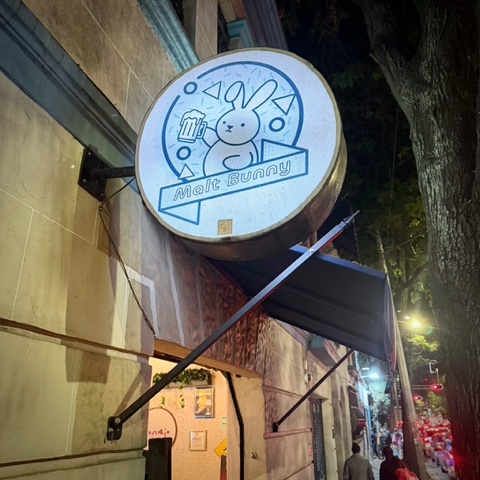
    • Malt Bunny bridges bar and bottle shop, ideal for discovering Mexican craft beer to take away or for striking up conversations with fellow beer lovers.
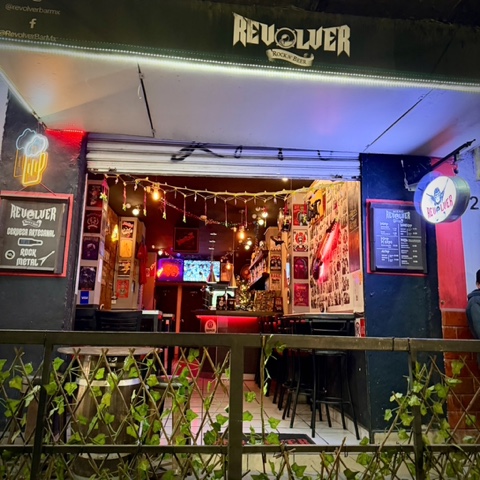
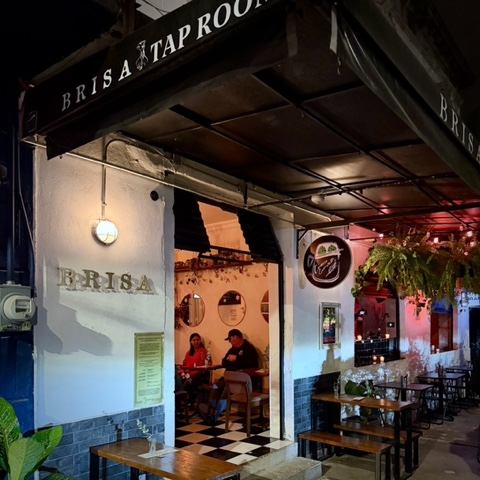
    • Revolver and Brisa represent a newer wave of projects, adding fresh energy and contemporary styles to Roma’s ever-evolving beer landscape.

    Together, these places form a scene that feels organic rather than curated, shaped by daily life in the neighbourhood.

    Why Roma works so well for beer-minded travellers

    What makes Colonia Roma special isn’t just the beer — it’s how seamlessly beer fits into the travel experience.

    You can start the day with coffee and pastries, wander through independent shops, enjoy lunch on a shaded terrace, and finish with a locally brewed lager or IPA — all without leaving the neighbourhood. There’s no need for taxis or strict planning; Roma rewards curiosity.

    A final sip

    Colonia Roma may not market itself as a beer destination, but that’s precisely its charm. For travellers who prefer discovering places organically — through wandering streets and unplanned stops — this neighbourhood offers one of the most authentic and enjoyable craft beer experiences in Mexico City.

    Roma doesn’t shout about its beer scene. It simply pours it — fresh, local and best enjoyed at walking pace. 

  • Breweries in Mexico City: from pioneering nostalgia to an independent present

    To speak today about craft beer in Mexico City is to speak of a scene that is creative, restless and permanently under tension. A fertile ecosystem where technique, neighbourhood identity and experimentation coexist — but also one constantly threatened by economic interests that have repeatedly shown they neither understand nor respect the culture they attempt to monetise.

    The current scene did not emerge spontaneously. It has clear roots. And it also has scars.

    Beer Factory: origin — and warning

    In 1997, when the word beer in Mexico was virtually synonymous with industrial lager, Santa Fe Beer Factory opened a crack in the wall. Brewing on site, talking openly about malts, hops, styles and food pairing was, for thousands of drinkers, a first encounter with something that did not follow the dominant script.

    Beer Factory became a school, a showcase and a point of entry. For many, it was where they tasted their first stout, their first IPA, their first beer that truly tasted different. It offered more than beer — it offered experience and hinted, for the first time, at a Mexican beer culture outside the industrial model.

    Its later history, however, became an uncomfortable lesson.

    Expansion brought more than new locations; it brought a corporate logic that slowly stripped meaning from what had once been a cultural project. Decisions stopped being made around the brewhouse and began to follow spreadsheets, scalability targets and boardroom logic. The product became secondary. Identity became negotiable. Community became expendable.

    Beer Factory did not fail because the market rejected it — it was absorbed by it. And in that process, it lost the very thing that made it relevant. Its closure was not an accident, but a direct consequence of allowing craft culture to be subordinated to corporate interests that never truly understood it.

    That mistake — repeated globally across the craft beer world — remains a warning for anyone willing to pay attention.

    Mexico City today: independence as a position, not a slogan

    The current beer scene in Mexico City exists because it learned, often the hard way, that independence is not a label but a daily practice. That growth does not have to mean selling out. And that not all capital is compatible with the culture it claims to support.

    Today, craft beer lives in projects that choose coherence over mass appeal, and honesty over forced scalability.

    Modelo – Lago Alberto

    The only industrial brewery producing within Mexico City. Its presence serves as a reminder that large-scale brewing still dominates, operating under entirely different logics — even when it occasionally attempts to position itself alongside craft culture.

    Cosaco

    One of the early independent projects with a strong old-school following. Cosaco focuses on malt-forward, full-bodied ales, brewed without preservatives, artificial colourings or flavourings.

    Its space, El Armadillo, reflects a community-driven approach: craft beer, home-style food and vinyl records, without grand narratives or expansionist ambitions.

    CruCru

    Independent Chilango Brew.
    CruCru is unfiltered local identity. It does not aim to please everyone, nor to standardise its output. It is rooted in the neighbourhood — in Colonia Roma, in La Romita, and in the layers of history that define the area.

    Here, beer is not an isolated product, but part of a cultural context that cannot be mass-produced or franchised without losing its meaning.

    Escollo

    Escollo never asked for permission. Since 2009, it has defended a clear position: beers with backbone, without compromise and without dilution for the sake of broader markets.

    Inspired by classic styles and driven by experimentation, Escollo represents a principle increasingly under pressure: growing without betraying oneself. This vision is reinforced through its brewpub, La Roma Brewing, while remaining firmly independent.

    Cypres

    Cypres has secured its place through consistency and technical execution. Its awards and steady presence in Mexico City reflect a more mature stage of the scene, where sustained quality matters more than inflated narratives or promises of endless growth.

    Nómada

    Founded in 2016, Cervecería Nómada understands craft beer as a collective effort. Far removed from the corporate logic of “grow or disappear”, its focus is collaboration, shared work and mutual support.

    For Nómada, independence does not mean isolation — it means building networks capable of resisting an increasingly hostile market for those unwilling to sell their identity.

    Drinking with memory

    Beer Factory is gone, but its story remains as both origin and cautionary tale. Remembering it is not about romanticising the past, but about understanding what happens when craft culture is handed over to interests that only know how to measure value in volume and returns.

    In Mexico City, every brewery that chooses to remain independent, protect its identity and resist corporate temptation is doing more than making beer — it is actively defending a culture.

    The scene will continue to change. Spaces will close. Names will disappear. But one thing is increasingly clear:
    craft beer does not grow stronger when it is sold — it grows stronger when it is defended.

    We know this list is not exhaustive.
    Mexico City’s beer scene is wider, deeper and more diverse than any single article can capture. We invite readers, brewers and drinkers alike to share the projects, taprooms and breweries we may have missed, and to keep the conversation — and the culture — alive.

  • From British pubs to pocket pubs: small spaces, shared beer culture

    Long before “craft” became a global buzzword, the British pub had already perfected something many modern beer bars still chase: a place built around conversation, familiarity and well-kept beer. Pubs were never about scale. They were about proximity — to the bar, to the bartender, to the people around you.
    That idea has travelled, evolved and resurfaced in cities around the world under a new name: the pocket pub.


    The British pub as a foundation
    Traditional British pubs have always embraced compact spaces. Standing at the bar, short menus, regulars who return several times a week, and staff who guide you through the beer rather than overwhelm you with options — these are long-established principles in UK pub culture.
    Places like The Rake, The Harp or neighbourhood locals across London show how a small footprint can still deliver a complete beer experience. The focus is not spectacle, but consistency; not abundance, but care.
    This pub philosophy — intimate, beer-led and community-driven — is the cultural backbone of what we now call pocket pubs.


    What is a pocket pub today?
    A pocket pub is a modern, urban interpretation of that same idea. It’s a small-format beer bar, designed for cities where space is limited but expectations are high.
    Pocket pubs prioritise:
    compact, human-scale spaces
    carefully curated beer selections
    direct interaction between staff and guests
    a strong relationship with the street and the neighbourhood
    They are not brewpubs, not taprooms, and not bars built around entertainment. They are places to drink well, talk freely and return often.


    The pocket pub finds a home in Mexico City
    In Mexico City, the pocket pub concept has found particularly fertile ground. Dense neighbourhoods, walkable streets and a maturing craft beer audience have created the perfect conditions for small, beer-focused bars to thrive.
    Here, the pocket pub doesn’t feel imported — it feels natural.


    Malt Bunny captures the relaxed side of the pocket pub idea. From the street, it already signals approachability: a neighbourhood bar where the beer selection is thoughtful and the atmosphere encourages repeat visits.


    Discreet and understated, Revolver reflects a very British idea: let the beer do the talking. Its small size and focused offering make it a clear pocket pub reference within the city.


    In the heart of Roma, Brisa feels like a pause in the urban rhythm. Compact, welcoming and well integrated into the neighbourhood, it shows how pocket pubs fit seamlessly into everyday city life.


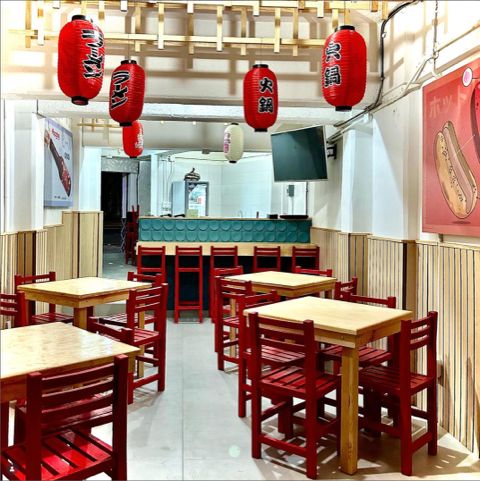
    Hop Dog in Narvarte expands the pocket pub idea slightly by pairing craft beer with asian inspired street food, while keeping the same core values: closeness, informality and a strong sense of place.


    A shared language, different accents
    What connects British pubs and Mexico City pocket pubs is not imitation, but shared values. Both rely on trust, repetition and community. Both understand that great beer doesn’t need a large stage — just the right setting.
    As Latin American beer culture continues to evolve, pocket pubs show how old ideas can feel new again when adapted thoughtfully to local streets and local drinkers.
    Because whether in London or Mexico City, the best beer spaces are often the smallest ones.